


Invasive Damp Surveys

In-Depth Damp Investigation
When the cause is hidden, an invasive survey reveals what’s happening behind walls, floors or ceilings.
Some damp or mould issues can’t be diagnosed from the surface alone. When readings are unusual, patterns don’t align, or we suspect a hidden leak or structural defect, an Invasive Survey provides the definitive answers that a non-intrusive inspection can’t reach.
This survey is recommended only when necessary and only after a Non-Invasive Survey indicates the need for deeper investigation.
When You Need an Invasive Survey
An Invasive Survey is ideal when:
- Mould returns repeatedly in the same area
- Internal moisture readings suggest hidden leaks
- Thermal imaging reveals abnormal cold spots
- There are signs of structural moisture penetration
- External defects appear linked to internal problems
- Landlord or insurer requires conclusive evidence
This type of invasive damp survey is common in older buildings, converted flats, properties with historic leaks, and homes where multiple contractors have been unable to identify the cause.
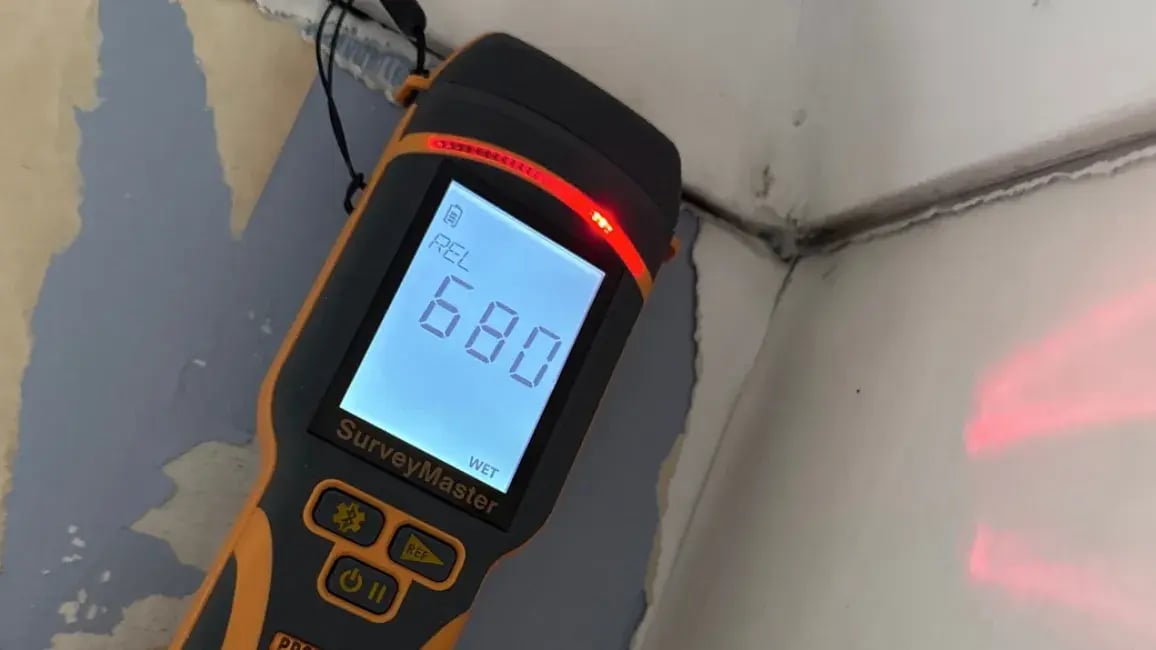
What We Do During an Invasive Survey
Our surveyor will carry out controlled, minimal openings to inspect inside the structure safely and professionally. These openings are always made good at a cost.
The investigation may include:
Removing small sections of plaster or skirting
Opening wall or ceiling cavities
Inspecting insulation and timber
Checking for hidden leaks
Testing for moisture behind tile backboards
Boroscope camera inspection
All disruption is kept to an absolute minimum, and we always explain and seek approval before opening any area.

Why It Matters
An Invasive Survey offers:
Definitive diagnosis
Identifies the true cause of damp and mould, not just the symptoms.
Prevention of unnecessary repairs
Only issues identified by evidence are recommended.
Essential documentation for legal, rental or insurance cases
Clear photographic evidence and readings.
Peace of mind
You know exactly what’s happening inside the property.
Before & After: What Happens to the Openings?
Customers often worry about damage. We reassure them:
All openings are repaired and made good before we leave.
Surfaces are restored neatly and professionally, with any additional costs agreed before works are carried out.
How It Works
1. Initial Non-Invasive Survey
We only recommend invasive works if absolutely needed.
2. Planning & explanation
We discuss where openings will be made and why.
3. Controlled investigation
Small openings allow us to inspect timbers, cavities, insulation and pipework.
4. Evidence collection
Photos, moisture readings, thermal images and written observations.
5. Full diagnostic report
Clear findings, causes and recommended next steps.
FAQs
Usually very small — often just enough for an endoscope or moisture probe.
We protect the area and clean thoroughly afterwards.
Sometimes, but we’ll tell you in advance.
Yes. All openings are reinstated professionally.
What Our Clients Say
Don't just take our word for it - hear from homeowners, housing associations, and property managers we've helped.
Need A Definitive Diagnosis?
Fully Accredited & Trusted