


By JAG on Aug 27, 2026, 11:00:01 AM
Managing water ingress in residential portfolios requires nothing less than a forensic and methodical approach to remediation. When water breaches the building envelope, the source of the ingress needs to be identified with pinpoint accuracy. Even well-informed guessing at the source may lead to failed repairs, frustrated occupants, and wasted maintenance budgets.

To protect your physical assets, your occupants properly and your professional reputation you need to understand exactly what happens during professional moisture intrusion investigations in buildings.
This process relies on hard, scientific data, eliminating guesswork and ensuring that your long-term maintenance strategy is built on facts.
The Importance of a Moisture Investigation
Before authorising any invasive physical repair work, property owners should first secure an independent moisture investigation. A common and costly mistake in property management is to treat only the visible symptoms, such as painting over a damp patch or replacing damaged skirting boards, without ever finding the actual source of the water.
This reactive approach guarantees the issue will return.
An independent consultant conducts a thorough root cause analysis. Because they do not sell physical repair services or chemical treatments, they have no financial incentive to recommend unnecessary strip-out works or expensive wall tanking systems.
The sole objective of this investigation is to provide an objective report detailing exactly how the water is entering and what specific steps are needed to stop it permanently.
Furthermore, this objective approach is a matter of strict legal compliance.
Failing to address water ingress properly exposes property owners to housing disrepair claims and regulatory penalties. Investing in a proper diagnosis upfront prevents the catastrophic financial waste associated with misdiagnosis and lengthy litigation.
Overview of the Investigation Process
A professional assessment is methodical, structured and grounded in precision. A standard valuation surveyor might simply flag a high moisture reading on a wall and recommend you call a damp proofing company.
In stark contrast, a forensic investigator treats the building as a complex physical system. The process begins with a detailed review of the building's history, construction type, and any recent maintenance work.
The investigator understands that applying modern, impermeable materials to an older, breathable structure often traps water and accelerates structural decay. The independent surveyor then conducts a thorough external and internal inspection to map the physical layout and identify obvious defects.
However, the core process relies entirely on advanced diagnostic technology. Rather than tearing walls apart to find a leak, the investigator uses non-destructive testing to trace the water's path back to its absolute origin.
Water Escape Testing Methods
To gather accurate data, specialists deploy a suite of highly calibrated diagnostic tools. This scientific approach ensures no pockets of moisture go undetected. The process involves:
Thermal Imaging and Moisture Mapping
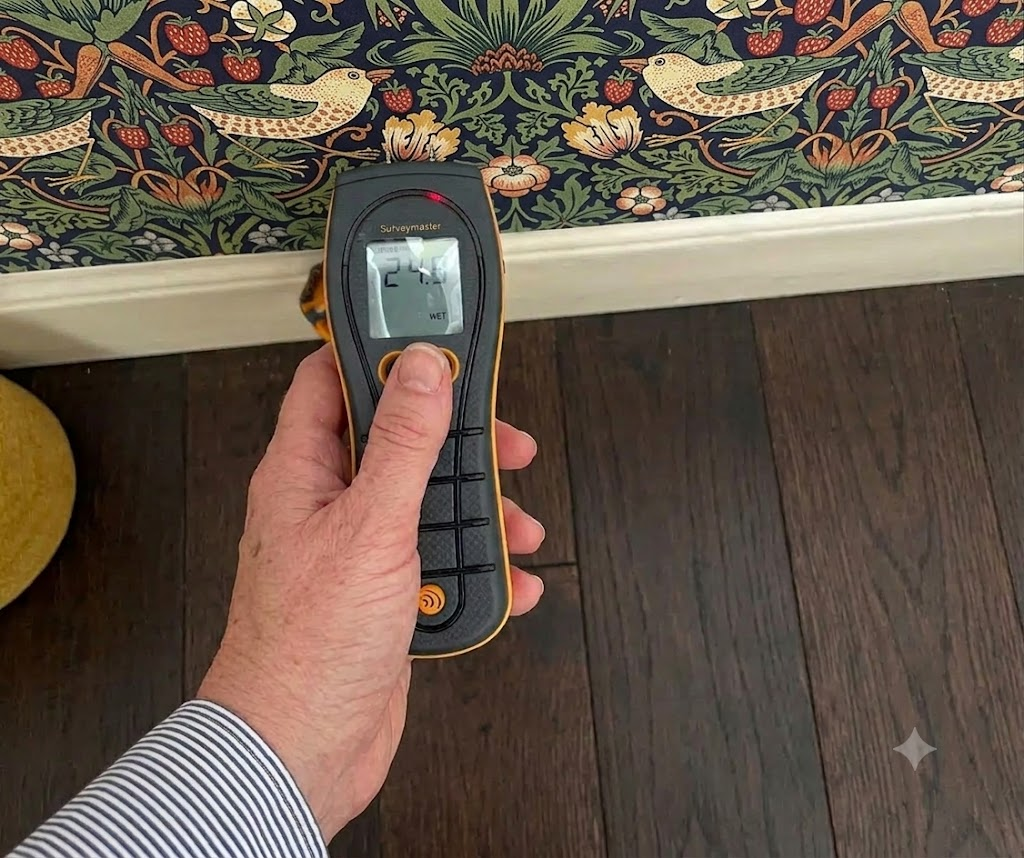
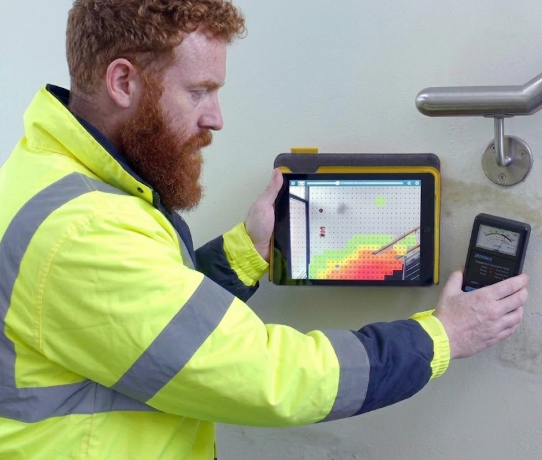
Infrared thermography is the primary diagnostic tool. While thermal cameras cannot see moisture directly, they detect the minute temperature differences caused by evaporating water. This highlights hidden cold anomalies behind solid plaster or beneath floorboards. Once an anomaly is identified, the surveyor uses electronic moisture meters to take precise readings, mapping the exact boundary between wet and dry materials.
Environmental Monitoring
Water ingress is frequently complicated by atmospheric conditions.
Surveyors use precision hygrometers to measure relative humidity, temperature, and dew points within the property. In complex cases, they will install continuous data loggers to monitor how the building performs over several days or weeks.
This data proves definitively whether a damp issue is caused by a physical structural leak or inadequate ventilation leading to severe condensation.
Chemical Salts Analysis
In certain situations, surveyors will conduct chemical salts analysis. By analysing the chemical composition of the moisture found on the masonry, they can determine if the water has risen from the ground, leaked from a chlorinated mains plumbing pipe, or entered through the external brickwork.
This chemical evidence completely removes subjective assumptions from the final diagnosis.
Key Areas of Focus During Investigations
During the assessment, the surveyor evaluates several critical zones. The building envelope is a primary focus, including the integrity of the roof covering, rainwater goods, external render, and the damp proof course.
Even a tiny crack in the high-level masonry can allow significant water to travel down cavity walls and pool in entirely different areas of the property.
The internal plumbing infrastructure is another major focus area, as slow, hidden leaks under shower trays or behind kitchen units often mimic structural dampness perfectly.
Finally, the surveyor assesses the property's ventilation strategy. Modern draught-proofing often traps moisture-laden air inside, creating the perfect biological conditions for black mould to thrive.
Implementing Effective Repair Strategies
The final output of a professional moisture investigation is a comprehensive, factual report. This document provides a strict specification for repair. Instead of asking a contractor what they think should be done, you hand them a scientifically backed scope of work to quote against.
Managing housing stock requires absolute certainty. By integrating comprehensive structural analysis and Air Quality & Surface Testing into your maintenance protocols, you protect your occupants and your financial interests.
If you're dealing with persistent leaks or complicated damp issues, contact us today to schedule an independent, forensic assessment of your property.
What is Moisture Mapping and When is it Needed?
Modern Home Dampness: Why New Properties Still Suffer From Mould Growth?

No Comments Yet
Let us know what you think