Request a Survey\](https://hubspot-no-cache-eu1-prod.s3.amazonaws.com/cta/default/147351228/interactive-401945745608.png)](https://www.jag-ps.co.uk/hs/cta/wi/redirect?encryptedPayload=AVxigLJT%2BF9gFhuvq3TPJQK4rocpHRQ%2FFpaufcJpkE6OQs3OVimHqqU%2BdoHXxGoiipKtJqcCJFl%2BTx0MIIQsPKeJAjI9yVGMvAdjW%2FynnIxCpdzO4zuxI7fM8ufs8Qr2fQFj2mYP%2B1cetLK971VRrajRqu3DbNRGgb45sE07Gi82mIjhB%2F9XhkHzKJShx19O&webInteractiveContentId=401945745608&portalId=147351228) [](https://www.jag-ps.co.uk/hs/cta/wi/redirect?encryptedPayload=AVxigLJT%2BF9gFhuvq3TPJQK4rocpHRQ%2FFpaufcJpkE6OQs3OVimHqqU%2BdoHXxGoiipKtJqcCJFl%2BTx0MIIQsPKeJAjI9yVGMvAdjW%2FynnIxCpdzO4zuxI7fM8ufs8Qr2fQFj2mYP%2B1cetLK971VRrajRqu3DbNRGgb45sE07Gi82mIjhB%2F9XhkHzKJShx19O&webInteractiveContentId=401945745608&portalId=147351228) [](https://www.jag-ps.co.uk/hs/cta/wi/redirect?encryptedPayload=AVxigLJT%2BF9gFhuvq3TPJQK4rocpHRQ%2FFpaufcJpkE6OQs3OVimHqqU%2BdoHXxGoiipKtJqcCJFl%2BTx0MIIQsPKeJAjI9yVGMvAdjW%2FynnIxCpdzO4zuxI7fM8ufs8Qr2fQFj2mYP%2B1cetLK971VRrajRqu3DbNRGgb45sE07Gi82mIjhB%2F9XhkHzKJShx19O&webInteractiveContentId=401945745608&portalId=147351228) - About - [About us](https://www.jag-ps.co.uk/independant-damp-surveyor) - [Meet the team](https://www.jag-ps.co.uk/meet-the-team) - Services - [Damp & Mould Surveys](https://www.jag-ps.co.uk/damp-and-mould-surveys) - [Air Quality & Surface Testing (PRV)](https://www.jag-ps.co.uk/commercial-air-quality-testing) - [Water Restoration](https://www.jag-ps.co.uk/water-damage-restoration-service) - [Commercial Leak Detection](https://www.jag-ps.co.uk/commercial-water-leak-detection-services) - [Legal Disrepair Surveys](https://www.jag-ps.co.uk/damp-disrepair-specialist) - Sectors - [Social Housing](https://www.jag-ps.co.uk/damp-survey-for-housing-development) - [Private Landlords & Letting Agents](https://www.jag-ps.co.uk/damp-survey-for-landlords) - [Facilities Management](https://www.jag-ps.co.uk/commercial-proprty-damp-survey) - [High Net Worth Individuals](https://www.jag-ps.co.uk/high-value-properties) - Resources - [News](https://www.jag-ps.co.uk/news) - [Accreditations / Partners Page](https://www.jag-ps.co.uk/accreditations-and-trusted-partners) - [Contact](https://www.jag-ps.co.uk/contact-us) [](https://www.jag-ps.co.uk/hs/cta/wi/redirect?encryptedPayload=AVxigLJT%2BF9gFhuvq3TPJQK4rocpHRQ%2FFpaufcJpkE6OQs3OVimHqqU%2BdoHXxGoiipKtJqcCJFl%2BTx0MIIQsPKeJAjI9yVGMvAdjW%2FynnIxCpdzO4zuxI7fM8ufs8Qr2fQFj2mYP%2B1cetLK971VRrajRqu3DbNRGgb45sE07Gi82mIjhB%2F9XhkHzKJShx19O&webInteractiveContentId=401945745608&portalId=147351228)  J A Gilbert Property Services Limited Index House St George’s Lane Ascot SL5 7ET All Topics [All Topics](https://www.jag-ps.co.uk/news)[Damp & Mould surveys](https://www.jag-ps.co.uk/news/tag/damp-mould-surveys)[Air Quality & Surface Testing](https://www.jag-ps.co.uk/news/tag/air-quality-surface-testing)[Commercial](https://www.jag-ps.co.uk/news/tag/commercial)[Mould Removal](https://www.jag-ps.co.uk/news/tag/mould-removal)[Mould removal and remediation](https://www.jag-ps.co.uk/news/tag/mould-removal-and-remediation)[Housing Disrepair](https://www.jag-ps.co.uk/news/tag/housing-disrepair)[Water Damage Restoration](https://www.jag-ps.co.uk/news/tag/water-damage-restoration) # Understanding the Importance of a Damp Survey for Building Developers By [**JAG**](https://www.jag-ps.co.uk/news/author/jag) on Aug 26, 2026, 11:00:00 AM 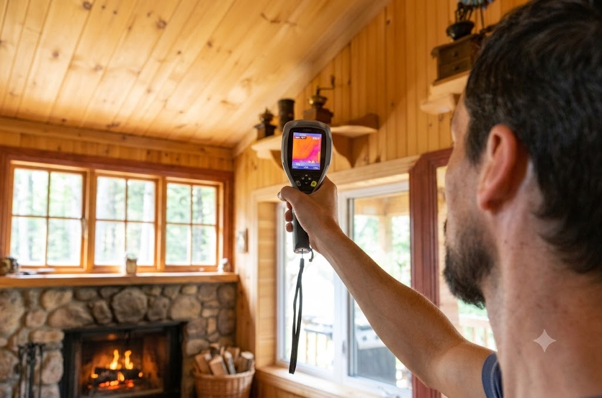 When acquiring newly constructed properties or managing major residential projects, the presence of moisture is a liability. One that can be highly damaging to both your margins and your reputation. [](https://www.jag-ps.co.uk/hs/cta/wi/redirect?encryptedPayload=AVxigLKUgpLWoYi17AdUUKghk8CgX8wGgv2QuDOiI3IvEOEa6Ziq35B7LwyOqh7q%2BCtNaFgGZMwzCKsj25N9rOgpLnjZTnYW2DSf2sTyUJzkpFcGJRdpobX5KMhpslCMRVQoE2qdmSKoUFrDCbJabRi1K4Oh147ZeRz1XcEMJ5dPn9eS5oXX1r368id64GsXEaju2Ku8ns0%3D&webInteractiveContentId=401945848010&portalId=147351228)
You may assume that a brand new building guarantees a completely dry, defect-free environment. However, modern construction methods and rapid development timelines can result in hard-to-detect moisture issues.
To protect your financial investment and ensure your property portfolio remains safe for future occupants, commissioning an independent [damp survey](https://www.jag-ps.co.uk/damp-and-mould-surveys) for building developers is a critical step in the handover and snagging process.
## **The Role of Damp Surveys in Housing Development**
The primary purpose of a forensic damp survey for housing is to identify moisture issues quickly. This prevents them from escalating into structural failures or serious biological hazards. Both of which are serious hazards for the occupants..
Modern properties are constructed with a heavy emphasis on thermal efficiency and airtightness. While this is excellent for reducing heating bills and increasing energy efficiency, it drastically reduces the building's natural ability to breathe.
During the construction phase, thousands of litres of water are introduced into the building fabric through wet trades like plastering, concrete pouring, and floor screeding.
If the development is sealed, insulated, and handed over before this construction moisture has adequate time to evaporate naturally, the water becomes trapped with nowhere to escape.
A proactive, independent [damp survey](https://www.jag-ps.co.uk/damp-and-mould-surveys) provides developers and buyers with the objective data needed to confirm a building is genuinely dry and ready for habitation, preventing costly retrospective repairs.
## **Private Owners and Issues with New Buildings**
For private landlords purchasing new stock, encountering mould or dampness within the first year of ownership is incredibly frustrating. When you raise a defect notice with the original developer, you may meet resistance. Developer warranty teams may deflect blame to the new occupants, citing lifestyle factors like drying clothes indoors or failing to open windows as the root cause of the condensation.
Without objective evidence, property owners are left fighting an uphill battle against the developer's contractors. Securing an independent, scientific investigation changes this dynamic entirely.
A forensic damp surveyor gathers pertinent data to prove whether the moisture is caused by tenant behaviour, trapped construction water, or a physical structural defect. This report furnishes you with the undeniable proof required to force the developer to honour their warranty and rectify the faults at their own expense rather than yours or the occupant's.
## **Common Types of Damp in Developments**
Understanding the specific types of moisture that afflict modern developments is essential for effective property management. An independent investigator will typically look for three main categories during their assessment.
The first, and perhaps most elusive, is construction moisture. This trapped water often manifests as widespread condensation and early-stage mould growth on newly painted walls and ceilings.
The second issue is penetrating damp. Rapid construction schedules can lead to workmanship errors, such as incorrectly installed window flashings, missing weep holes in brickwork, or defective roof membranes. These may allow rainwater to breach the external envelope.
The third common issue relates to environmental condensation driven by mechanical failure. Modern airtight homes rely heavily on mechanical ventilation and heat recovery systems or positive input ventilation.
If these systems are incorrectly specified, poorly installed, or simply not switched on, the indoor humidity will spike, leading to severe [condensation problems](https://www.jag-ps.co.uk/news/modern-home-dampness-in-new-properties) regardless of how well the property was built.
## **Key Components of a Damp Survey**
A proper investigation goes far beyond a visual walkaround. A forensic survey relies on advanced diagnostic technology to uncover the true condition of the building fabric.
The process typically begins with [thermal imaging](https://www.jag-ps.co.uk/news/what-does-a-damp-survey-involve). An infrared camera detects thermal anomalies and cold spots within the walls, highlighting missing insulation or hidden pockets of trapped water. The surveyor then uses electronic moisture meters to map the exact spread of water across the affected areas. To assess the internal environment, they will deploy precision hygrometers to measure relative humidity, surface temperatures and dew points.
By cross-referencing this environmental data with the structural moisture readings, the surveyor builds a complete, scientifically accurate profile of the building's performance.
## **How to Choose a Qualified Surveyor**
When selecting a professional to assess a new development, absolute independence is the most important factor. You must avoid damp proofing contractors offering free surveys. These companies make their money by selling remedial treatments like chemical injection courses, which are inappropriate and can even be damaging to modern cavity-wall constructions.
You need an independent consultancy that does not sell physical repair services.
Their only objective should be finding the truth. Look for surveyors who utilise laboratory-grade equipment and base their conclusions strictly on scientific building physics.
## **Keep Your Investment Strategy Watertight**
Navigating moisture issues in new builds requires hard facts. You cannot afford to rely on subjective opinions or developer excuses when the long-term viability of your asset is at stake. By integrating independent [Damp & Mould Surveys](https://www.jag-ps.co.uk/damp-and-mould-surveys) into your acquisition and snagging processes, you ensure that every property meets the required standards.
[Contact us today](https://cta-eu1.hubspot.com/web-interactives/public/v1/track/click?encryptedPayload=AVxigLJr4ot1Rt7584AW8dMPIMa7CqMTX3v8RyttOlD5YrdwdPgq0kICrIqlRRmDcVYs4hXVwLy4MFJpQl%2B358%2BqeHj1JfbpjQNbb8kPTMs5FTyxiTLCgc45ICQvhQQzc0n03r4MzQWK5wpe2G%2Bm58f40UPqz68A9%2Fr8Xzm0GqrJNrPEWaFaU5YjzvR1CP5H&portalId=147351228&webInteractiveId=1215765823728&webInteractiveContentId=401945745608&containerType=EMBEDDED&campaignId=&pageUrl=https%3A%2F%2Fwww.jag-ps.co.uk%2Fdamp-mould-surveys&pageTitle=Damp+%26+Mould+Surveys+London+%7C+Specialist+Damp+Survey+London&referrer=&userAgent=Mozilla%2F5.0+%28Windows+NT+10.0%3B+Win64%3B+x64%29+AppleWebKit%2F537.36+%28KHTML%2C+like+Gecko%29+Chrome%2F148.0.0.0+Safari%2F537.36&hutk=5cf0a8a8b0249a332f0fe857ecc9b4e8&hssc=93204354.6.1781108848033&hstc=93204354.5cf0a8a8b0249a332f0fe857ecc9b4e8.1780915647976.1781103974710.1781108848033.10&pageId=346291739875&analyticsPageId=346291739875&hsfp=18d23f82ac52ac22c143ce74e1a57a65&canonicalUrl=https%3A%2F%2Fwww.jag-ps.co.uk%2Fdamp-mould-surveys&contentType=standard-page) to schedule a forensic assessment and protect your property portfolio from hidden moisture defects.
[](https://www.jag-ps.co.uk/hs/cta/wi/redirect?encryptedPayload=AVxigLKn6Ewf4NrgFrIPVtvRn8dcximMJyud5ze8qWCo%2ByvFDWW9bpGd5aq8LVDxkwhLjDOWksGaSUCeCM0h6mu1mTGxPLhFeUSTCF5D5Aw%2FQtsByGz1pYxXpCYbVsKtyUvGHgwVUBxioT7R%2BzFC9w3AwjIn834vg5%2FDGYahkCiU%2BIT0Qwc%2Bf6%2B53q6gcKERea%2Ft8Q%3D%3D&webInteractiveContentId=387127319773&portalId=147351228)
- Recent
- Topics
- Archive
Recent
Topics
- [Damp & Mould surveys (26)](https://www.jag-ps.co.uk/news/tag/damp-mould-surveys)
- [Air Quality & Surface Testing (9)](https://www.jag-ps.co.uk/news/tag/air-quality-surface-testing)
- [Commercial (8)](https://www.jag-ps.co.uk/news/tag/commercial)
- [Mould Removal (6)](https://www.jag-ps.co.uk/news/tag/mould-removal)
- [Mould removal and remediation (3)](https://www.jag-ps.co.uk/news/tag/mould-removal-and-remediation)
- [Housing Disrepair (1)](https://www.jag-ps.co.uk/news/tag/housing-disrepair)
- [Water Damage Restoration (1)](https://www.jag-ps.co.uk/news/tag/water-damage-restoration)
See all
Archive
- [September 2026 (2)](https://www.jag-ps.co.uk/news/archive/2026/09)
- [August 2026 (4)](https://www.jag-ps.co.uk/news/archive/2026/08)
- [July 2026 (4)](https://www.jag-ps.co.uk/news/archive/2026/07)
- [June 2026 (3)](https://www.jag-ps.co.uk/news/archive/2026/06)
- [April 2026 (4)](https://www.jag-ps.co.uk/news/archive/2026/04)
- [January 2026 (1)](https://www.jag-ps.co.uk/news/archive/2026/01)
- [October 2025 (2)](https://www.jag-ps.co.uk/news/archive/2025/10)
- [September 2025 (4)](https://www.jag-ps.co.uk/news/archive/2025/09)
- [August 2025 (3)](https://www.jag-ps.co.uk/news/archive/2025/08)
- [July 2025 (3)](https://www.jag-ps.co.uk/news/archive/2025/07)
- [June 2025 (4)](https://www.jag-ps.co.uk/news/archive/2025/06)
- [May 2025 (1)](https://www.jag-ps.co.uk/news/archive/2025/05)
- [February 2025 (3)](https://www.jag-ps.co.uk/news/archive/2025/02)
- [January 2025 (2)](https://www.jag-ps.co.uk/news/archive/2025/01)
- [November 2024 (3)](https://www.jag-ps.co.uk/news/archive/2024/11)
- [September 2024 (1)](https://www.jag-ps.co.uk/news/archive/2024/09)
- [August 2024 (1)](https://www.jag-ps.co.uk/news/archive/2024/08)
- [December 2023 (1)](https://www.jag-ps.co.uk/news/archive/2023/12)
- [June 2023 (3)](https://www.jag-ps.co.uk/news/archive/2023/06)
See all
### Subscribe by email
Previous story
[← Is a Damp Survey Worth It? Exploring the Benefits](https://www.jag-ps.co.uk/news/is-a-damp-survey-worth-it)